A trade show stand isn't a single product. It's a kit of parts that, when assembled correctly, turns a 9 or 18 square metre patch of exhibition floor into something visitors actually walk into, stop at, and remember. The challenge for first-time exhibitors is that nobody sells you "a trade show stand". You have to assemble it yourself from the right components. Get the mix right and your stand pulls people in. Get it wrong and you pay for a pitch that the crowd walks past.
This is a practical equipment guide to building a trade show stand using the exhibition and display range at Branding Warehouse, plus the banners, flags and gazebos that work alongside them.
The Four Building Blocks of a Stand
Every effective stand has four components, regardless of size:
- A visual anchor at the back wall: backdrop, pop up wall, or fabric frame. This is what visitors see from across the hall, and it has to carry your name, offer and a clear call to action.
- A working surface: a printed table or counter where staff have face-to-face conversations with visitors. The table is the space where the actual sales conversation happens.
- Branded surfaces beyond the basics: printed tablecloths, tablerunners, side walls, sample tables. Every visible surface should reinforce the brand, not break it.
- Pull-in elements at the edge: pull up banners, feather flags, or A-frame banners placed at the boundary of your stand to catch traffic from the aisle and direct it inward.
Each building block can be scaled up or down depending on stand size and budget. A 3x3m stand might have one backdrop, one printed table, and one pull up. A 6x6m stand might have a full wall system, three tables, branded chairs and stools, and four pull ups. The proportions stay the same; the scale changes.
Tables and Tablecloths
The table is the working heart of your stand. It's where visitors hand over cards, take literature, sign up to your list, and have the conversations that turn into business. Don't underestimate its branding value.
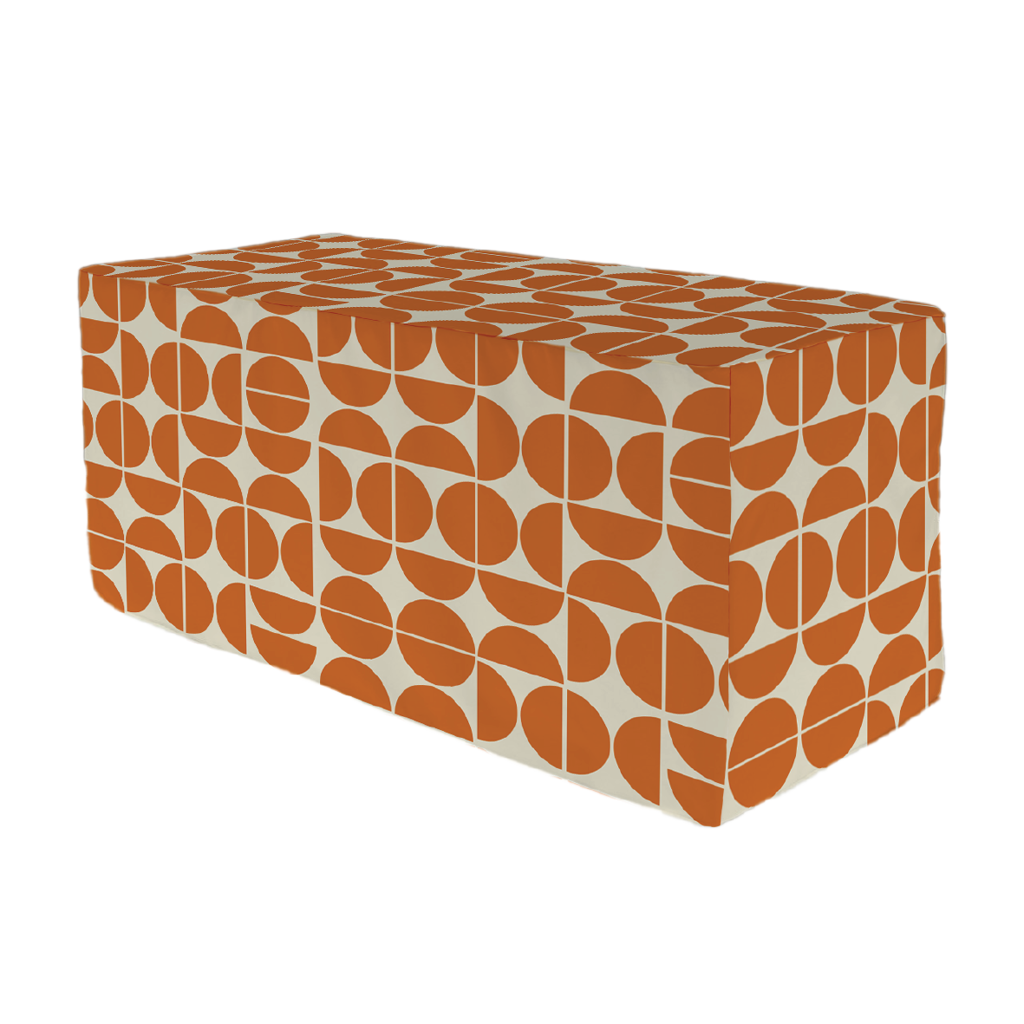
A printed tablecloth is the cheapest piece of additional branding you can add. A neutral table covered in a plain black or white cloth disappears. The same table covered in a fabric printed with your full brand artwork becomes a second sign at eye level for the visitor leaning in to talk to you. Branding Warehouse builds tablecloths to fit standard event-table sizes (typically 1.8m and 2.4m trestle tables) with full-coverage print on the front and sides.
Beyond a single working table, larger stands benefit from:
- Sample Tables: smaller side tables for product samples, brochures, giveaway items
- Bar Tables: tall standing-height tables for hospitality areas where visitors stand and chat with a coffee or drink
- Event Tables: branded folding tables for stands that need extra workspace without permanent fixtures
A common mistake is dressing the working table beautifully and leaving the side tables bare. If a sample table is visible to visitors, it should be branded, even if just with a runner or an A4 stand-up showing what's on the table.
Stand Walls and Backdrops
The back wall of your stand is the single biggest piece of branded media on the floor. It's also the photo backdrop your visitors will share on social media, so it needs to read both up close and from across the venue.
Branding Warehouse builds several wall formats:
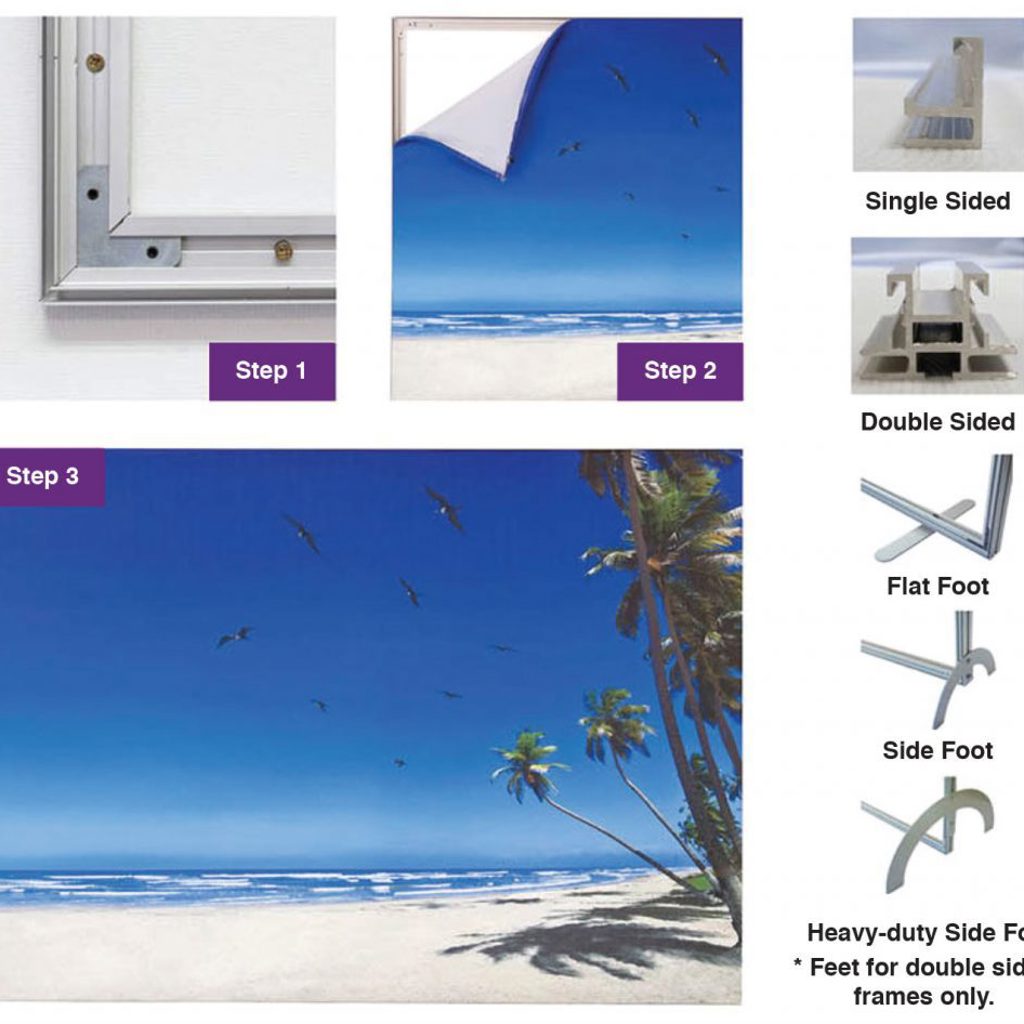
Fabric Frames are large rigid frames with printed fabric stretched over them. They come in heights from 2.2m to 3m+ and widths customised to your booth dimensions. The fabric stays sharp through repeated assembly, the frame ships flat, and the print can be replaced when artwork changes without replacing the frame.
A Backdrop Banner or Curved Backdrop covers a full booth back wall in 3m or wider increments. Curved backdrops draw the eye into the booth; flat backdrops give a clean photo background. Both formats pop up in 5-10 minutes with two people.
For stands that need a more architectural look, fabric tower and arch installations from the innovation range act as 3D anchors instead of flat panels. They cost more and need more setup time, but they're memorable in a way a flat backdrop isn't.
Kiosks, Booths and Activation Furniture
Larger stands or premium activations benefit from purpose-built furniture:
A Kiosk is a branded counter unit, typically waist-height or counter-height, that doubles as a check-in point, demo station or registration desk. Visitors approach the kiosk like they would a service counter, and the format itself signals "come here, ask us something."
A Change Booth is a small enclosed branded structure for fitting demonstrations, sampling stations, or any activation where visitors need a private moment with your product. Common at sports retailers, beauty brands, and any business demonstrating something visitors put on or interact with.
Director's Chairs and bar stools turn waiting time into a hospitality moment. If your sales conversations average more than two minutes, give visitors a place to sit. They'll stay longer, listen more, and remember the conversation better.
A branded Event Bin sounds trivial and isn't. At the end of an event, your stand is generating literature, drink cups, packaging waste. A branded bin keeps the stand looking maintained and turns a piece of practical hardware into another small reinforcement of the brand.
Lighting and Ambience
Most exhibition halls have generic overhead lighting that flattens everything. Stands that look better than others usually have at least some additional light source.
The Glo Lantern range is one option: internally-lit branded lanterns that hang or stand free and act as soft visual anchors. They're particularly effective for evening events, hospitality areas, and activations where the venue lighting will dim or change through the day.
For most working stands, a few warm-tone clip-on LED lights along the top of the backdrop will lift the entire stand. It's a small upgrade with disproportionate visual impact.
Outdoor Trade Shows: Adding Shade
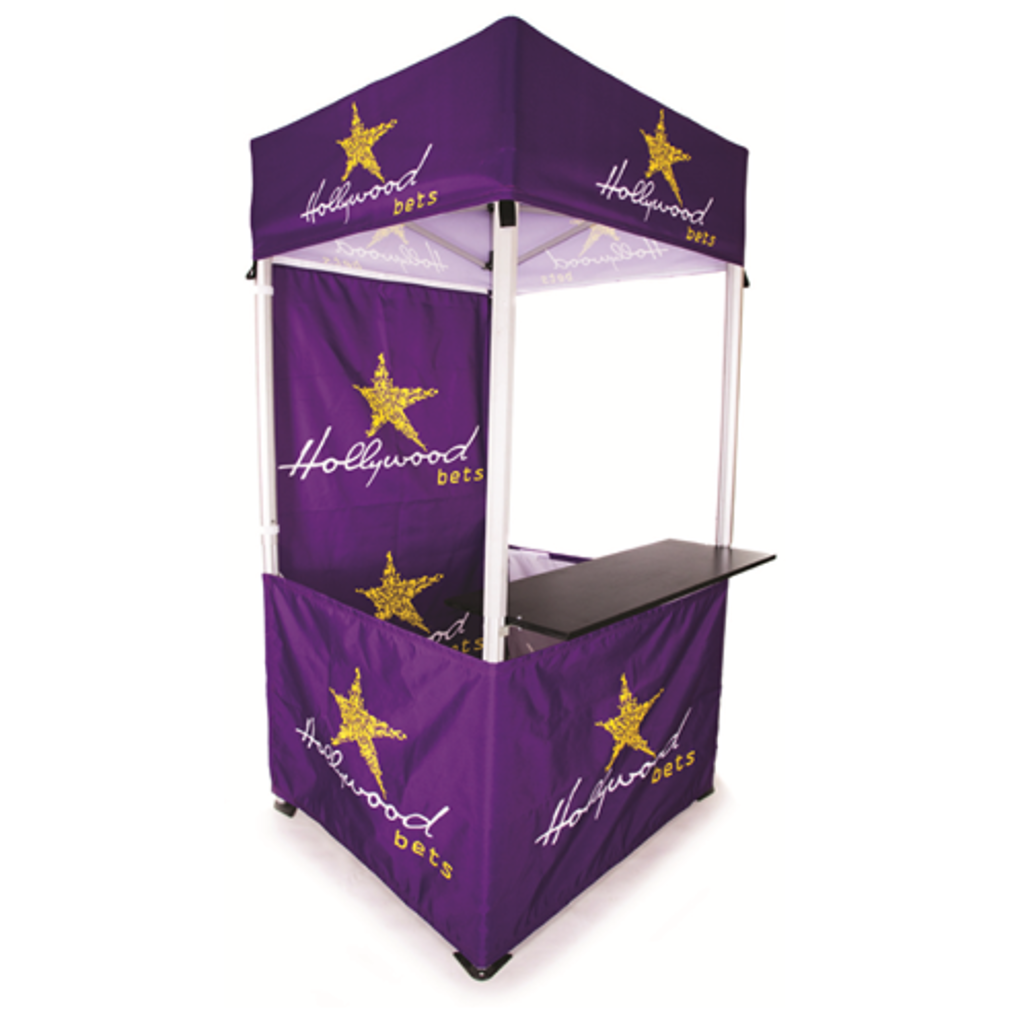
For trade shows held outdoors (county fairs, food and drink festivals, garden shows, sports expos), the equipment list is the same with one addition: shade. A printed gazebo becomes the stand's roof, the back wall replaces the booth backdrop, and the table sits inside the gazebo footprint. Pair with parasols for any overflow seating area or registration desk that sits outside the main gazebo.
For very large outdoor stands or hospitality areas, the Space Shade tensile structure covers a much larger area than a fixed-frame gazebo and gives the stand a distinctive architectural look.
Build Time, Storage and Transport
Three practical points that come up at every show:
Plan setup time backwards from doors-open. A small stand (1 backdrop, 1 table, 1 pull up) takes 30 minutes for two people. A medium stand (full wall, multiple tables, branded furniture) takes 90 minutes. A large stand with custom architecture takes 2-3 hours. Build in a buffer so you're not still setting up when visitors arrive.
Pack everything in labelled bags or cases. When breakdown happens at the end of a tired three-day show, you do not want to be matching a curved bracket to its backdrop in a pile of components. Branding Warehouse ships every product in proper carry bags or rigid cases, so keep the labels on, store everything in the right case, and packdown stays under an hour.
Store flat, store dry. Fabric prints, backdrops and tablecloths last for years if they're stored flat in clean dry cases. The same items folded into car boots, left in damp warehouses or stacked under heavier kit will show wear in months. The cost of a small dry storage cupboard pays for itself in extending stand-kit lifespan.
A well-built trade show stand is a years-long asset, not a one-event purchase. Branding Warehouse manufactures every piece of the display range in the UK, prints in-house, and ships across the country. Contact us if you'd like a configuration recommendation for your specific stand size and event type.