A trade show booth lives or dies by what people see in the first three seconds of walking past it. Pop up banners, pull ups and backdrop walls are how you control that view. They're the cheapest piece of stand kit relative to the visual real estate they occupy, and the difference between a stand that pulls people in and one that gets walked past usually comes down to which formats you've chosen and where you've placed them.
This is a practical guide to printed banners for trade shows: what each format actually does, how to combine them, and how to avoid the over-spending that catches a lot of first-time exhibitors.
Pull Ups vs Pop Ups: Different Tools, Different Jobs
The two terms get used interchangeably but they describe two different things.
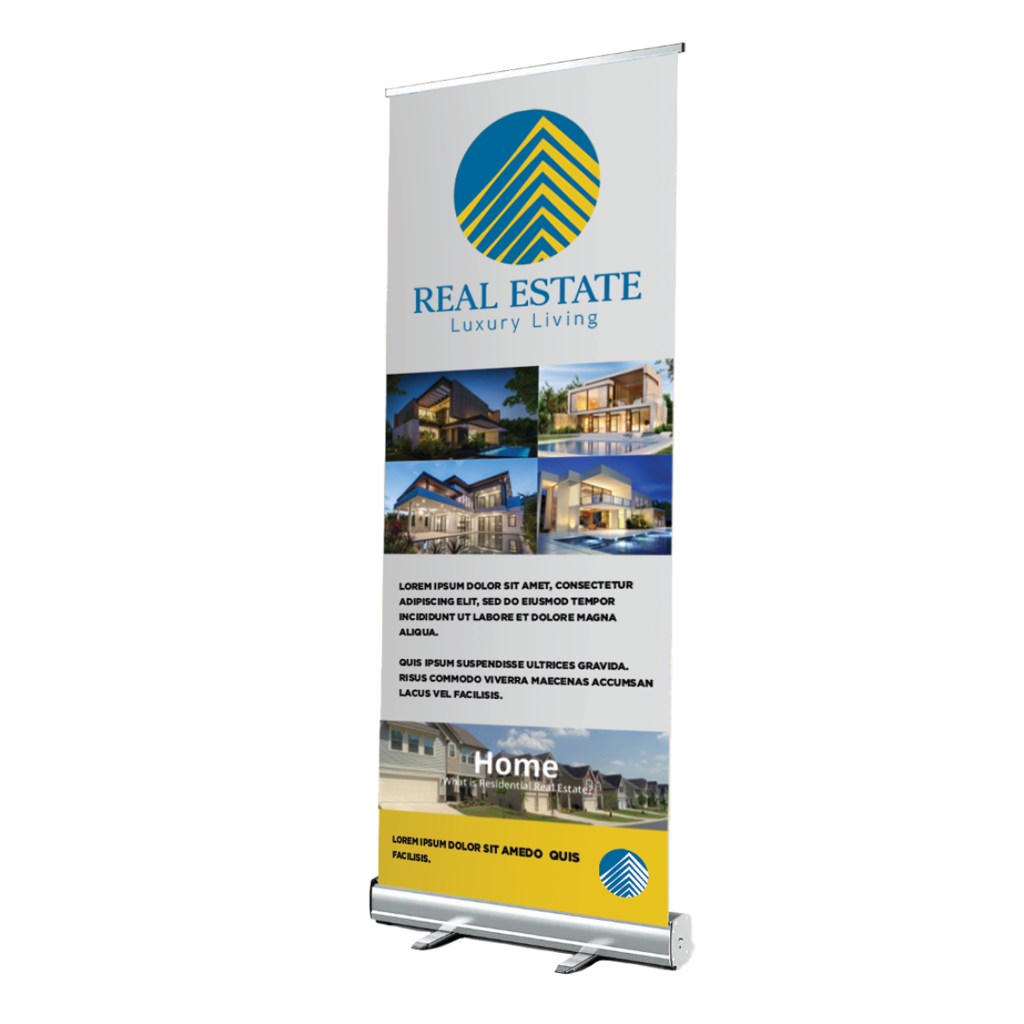
A pull up banner (sometimes called a roller banner or banner stand) is a single panel that pulls vertically out of a base unit. The base sits on the floor; the printed panel rolls up inside it like a window blind. Setup is one person, under a minute, anywhere there's a flat surface. Pack down is just as fast.
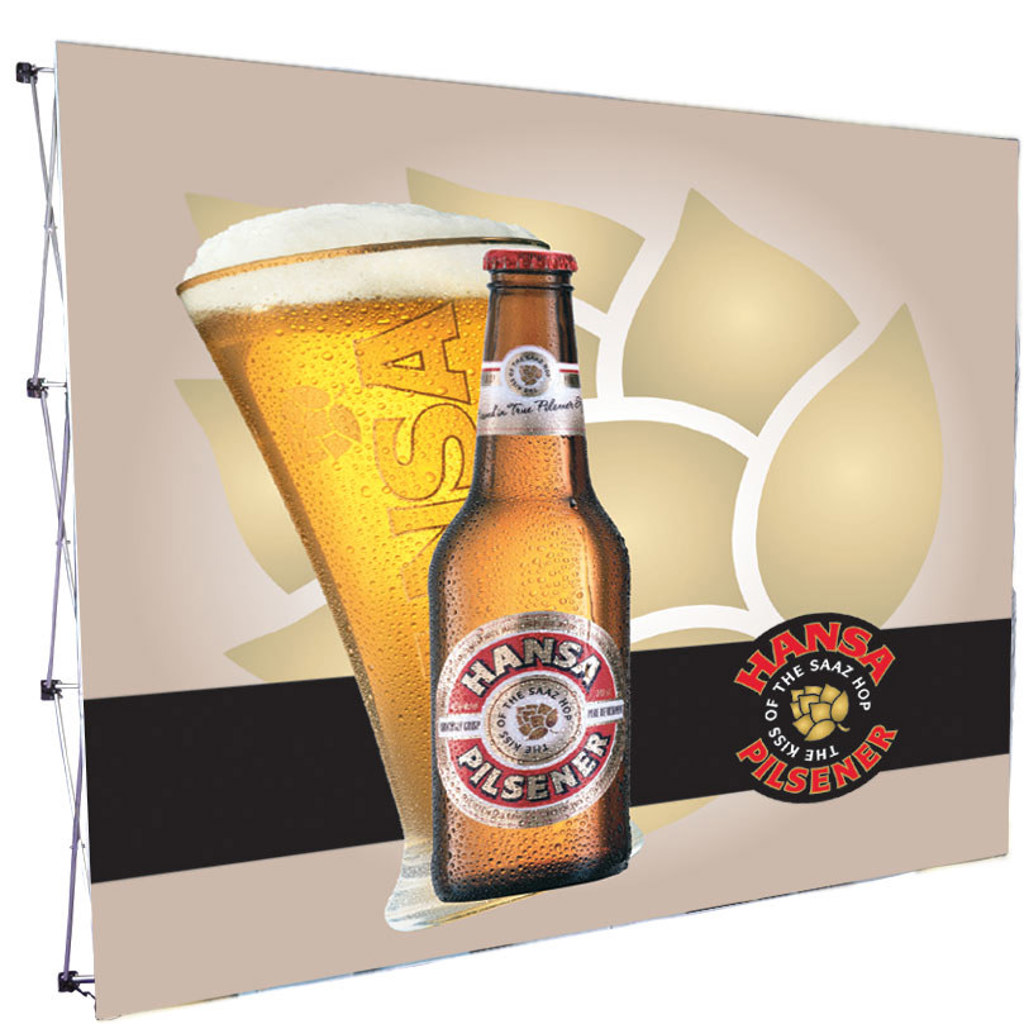
A pop up banner is a larger structure, typically a curved or flat backdrop wall, that pops open into a free-standing display. The frame folds flat for transport, then expands into a 2-3m wide panel covered in printed graphics. Setup is two people, around five minutes.
Use pull ups when you need a focused message in a tight space: at the end of a table, framing the entrance to your booth, marking a queue line, or pulling people from the aisle into your stand. Use pop ups when you need to fill a wall: the back of a booth, behind a stage, as a press photo backdrop, or as the main visual anchor of an exhibition stand.
The honest answer for most first-time exhibitors is "you need both, but start with the pull up if you only buy one." A pull up at the corner of a 3x3m booth is the highest-value piece of banner kit you can have. It carries the brand, the offer, and a CTA, and you can use it at every event you go to.
Backdrop Walls: When and Why
Backdrop walls are pop up banners' bigger sibling. They cover a full booth wall, usually 3m wide and 2.2m to 2.4m tall, with a single continuous printed graphic. Branding Warehouse builds several formats:
- Backdrop Banner: flat backdrop wall, the workhorse for booth backs and stage backings
- Curved Backdrop: curved-front pop up that sits forward into the booth, drawing the eye in
- Block Backdrop: rectangular block-style format with sharper edges, useful when the design has heavy graphic blocks rather than soft photography
- Slimline Backdrop: narrower-profile backdrop for tighter booth dimensions where a 3m wall would crowd the space
Backdrops do two jobs at once: they hide what's behind your booth (storage, rough wall, neighbouring stand mess) and they give visitors a clean photo backdrop. If your stand will be photographed for press, social media, or even just by visitors taking selfies with your branding, a backdrop is paying for itself before the show ends.
Sizing for the Space You Actually Have
The most common banner mistake is buying for the biggest event you'll ever do, not the booth size you'll have most weeks.
For a 3x3m booth: - One pull up at the corner facing the aisle - One 3m backdrop or 3m horizontal pop up at the back wall - Optionally a printed table runner or tablecloth on a small front table
For a 6x3m booth: - Two pull ups bracketing the main entry to the booth - One 3m or wider pop up backdrop centred on the back wall - Branded tablecloth on the meeting table
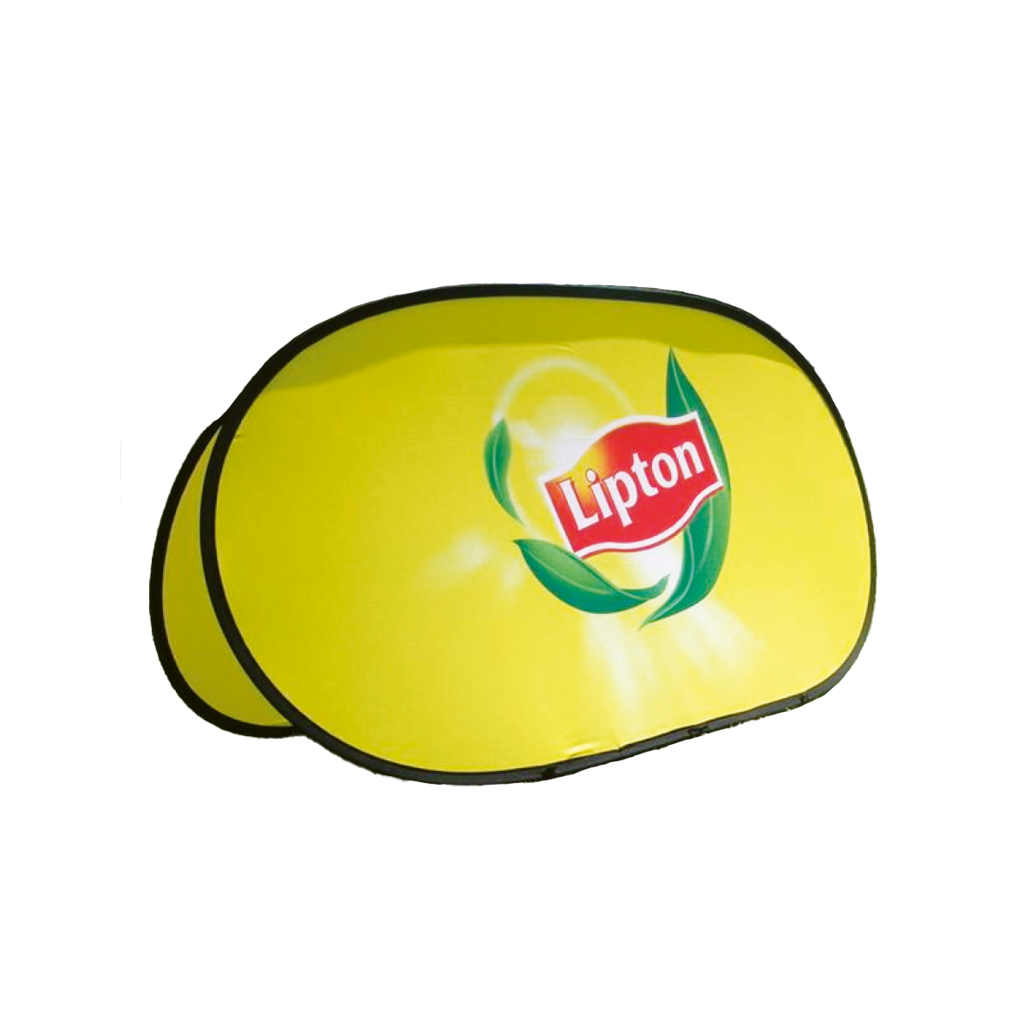
For a larger 6x6m+ stand: - A full 3m+ backdrop wall as the main visual anchor - Two or more pull ups distributed at booth entry points - A horizontal pop up acting as a side wall or divider for a meeting area - Hospitality table area with branded tablecloths and possibly an A-Frame banner outside the booth pulling people in
The trap is buying everything. A 3x3m booth with three pull ups, two pop ups, and a backdrop looks crowded. You've covered every visible surface in branding and given visitors no negative space to focus on the actual offer. Less, well-placed, beats more.
Crowd Barriers and Outdoor Banners
Not every banner sits inside a booth. For outdoor activations, festivals, sports events and street activations, two formats matter:
A Slimline Crowd Barrier is a printed banner that slides over standard event crowd-control fencing. Suddenly the barrier separating spectators from the action is a piece of branded media. Useful for sponsorship activations, race finish lines, and any event where there's already a fence that can carry your name.
Goals and fence branding banners are large PVC or mesh panels printed with your branding for attaching to existing fencing on sports fields, construction sites or parking lot perimeters. Mesh fabric versions allow wind through, which is essential anywhere with sustained breeze. Solid PVC is fine for short events and low-wind environments.
For shopfronts, the A-Frame banner is the cheapest piece of street-facing media you can run. Two printed panels in an A-shape stand on the pavement and pull walk-by traffic into your store or stand. They go out at opening and come in at close.
Print Quality and Artwork Prep
Three quick rules that save most artwork problems before they happen:
Set up artwork in CMYK at 100% scale, 100 dpi. Web-resolution images (72 dpi) look fine on a phone screen and pixelate badly when printed at 2m tall.
Leave a 50mm bleed on every edge. Banners get trimmed to fit hardware. Anything within 50mm of the edge is at risk. Keep your logo and key text well inside the safe area.
Avoid heavy black backgrounds when budgets matter. Solid black uses the most ink, takes the longest to dry, and shows scratches and fingerprints faster than any other colour. White, photography, or brand colours hold up better through repeated setups.
If you're not sure what works for your design, every BW order includes a printable proof. We send the proof, you sign it off, then we print. It's one extra round of email and it catches errors before they become 3m-tall mistakes on the show floor.
Reuse Across Events
The cost-per-event of a pull up drops every time you use it. Hardware lasts years. The graphic panel can be replaced when artwork changes. Most pull ups are designed for the panel to swap out without replacing the base, so you keep the structure and refresh the print between campaigns.
Get into the habit of treating banners like assets, not consumables. Store them properly: pull ups in their carry bags, backdrops folded flat in their cases, kept in a dry storeroom out of direct sun. Banners that live in the boot of a car bake in summer and frost in winter, and the print degrades twice as fast.
Branding Warehouse builds and prints all banner formats in-house in the UK. Browse the full banner range for sizes and formats, or get in touch if you'd like sizing advice for a specific show.